
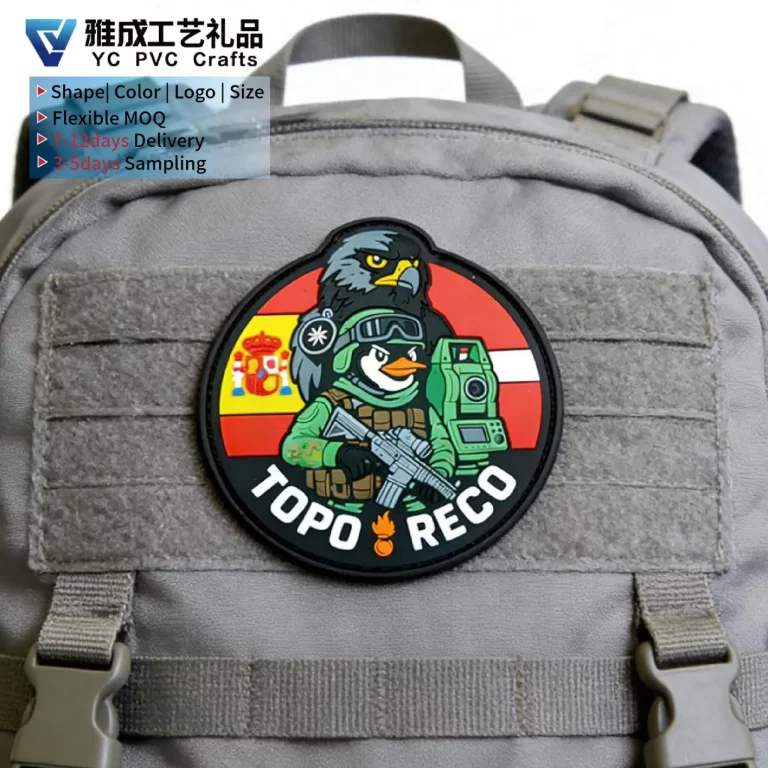
Custom 3D PVC Patches for Tactical Gear Brands
Introduction
Tactical gear brands operate in a competitive market where product functionality, durability, and brand identity all influence purchasing decisions. From tactical backpacks and plate carriers to outdoor equipment, pouches, and accessories, small design details can help a product stand out.
One increasingly versatile option is the custom 3D PVC patch.
Unlike traditional embroidered patches, 3D PVC patches use molded PVC to create raised logos, recessed details, and layered designs. This gives tactical gear brands more flexibility when developing distinctive product identifiers, branded accessories, and customizable gear components.
For brands sourcing patches for retail products, OEM projects, or private-label collections, the challenge is not simply creating an attractive design. The patch must also fit the product, meet quality expectations, and remain consistent across production batches.
This guide explains how custom 3D PVC patches can support tactical gear brands, what to consider during product development, and how to choose a suitable manufacturing partner.
1. What Are Custom 3D PVC Patches?
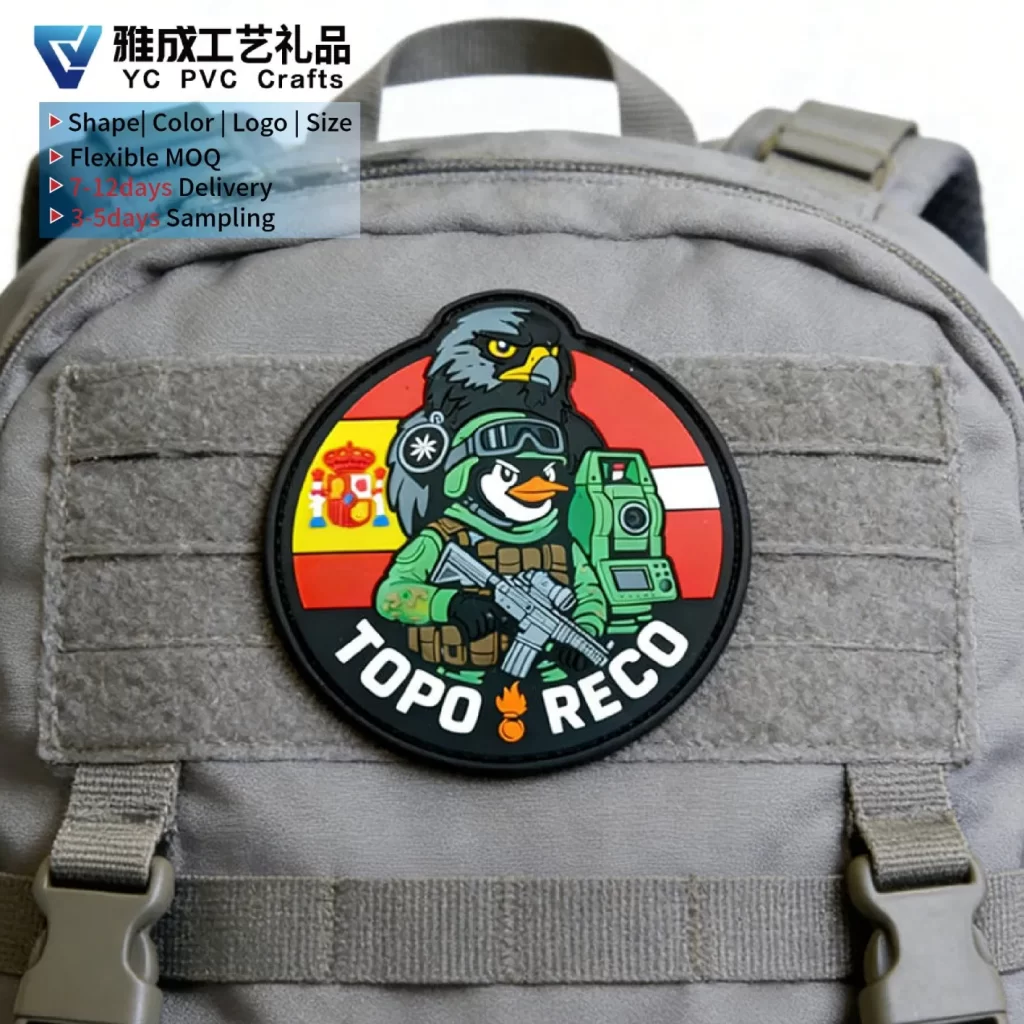
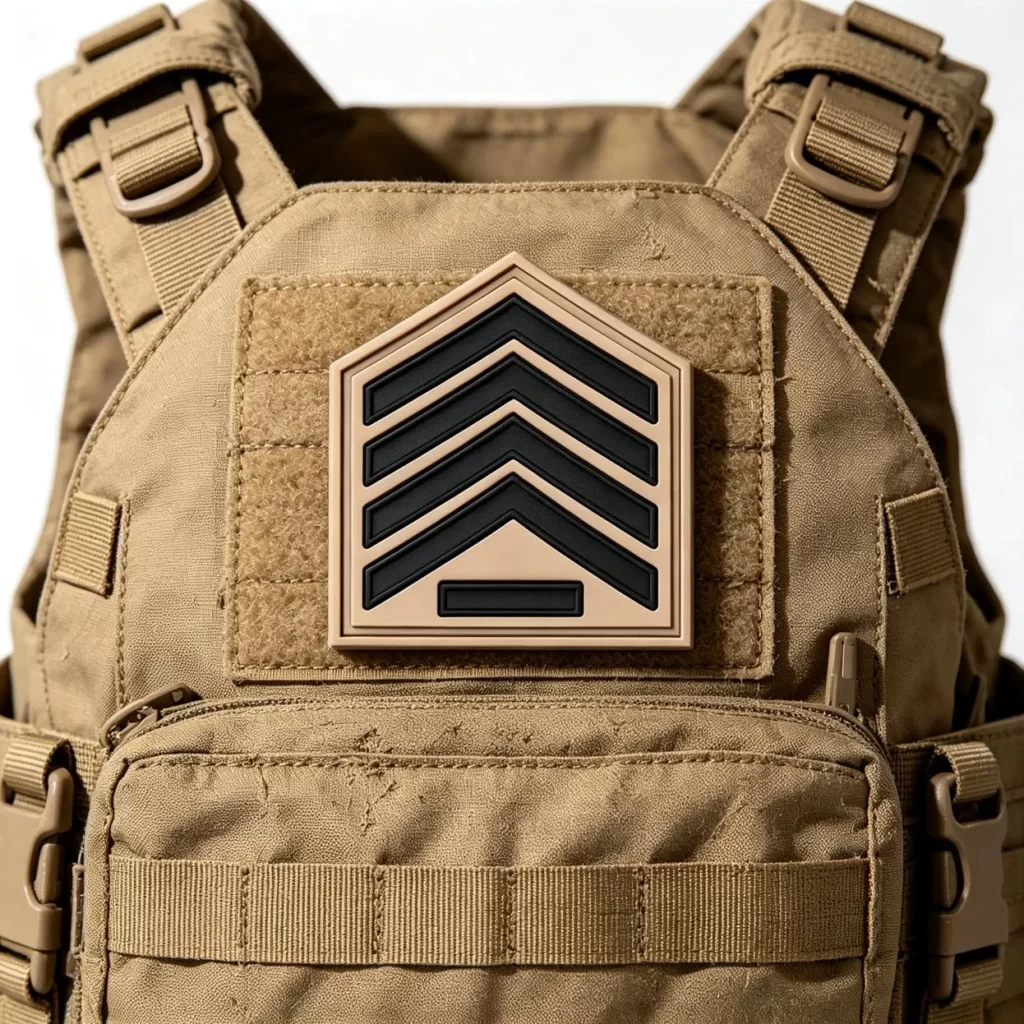
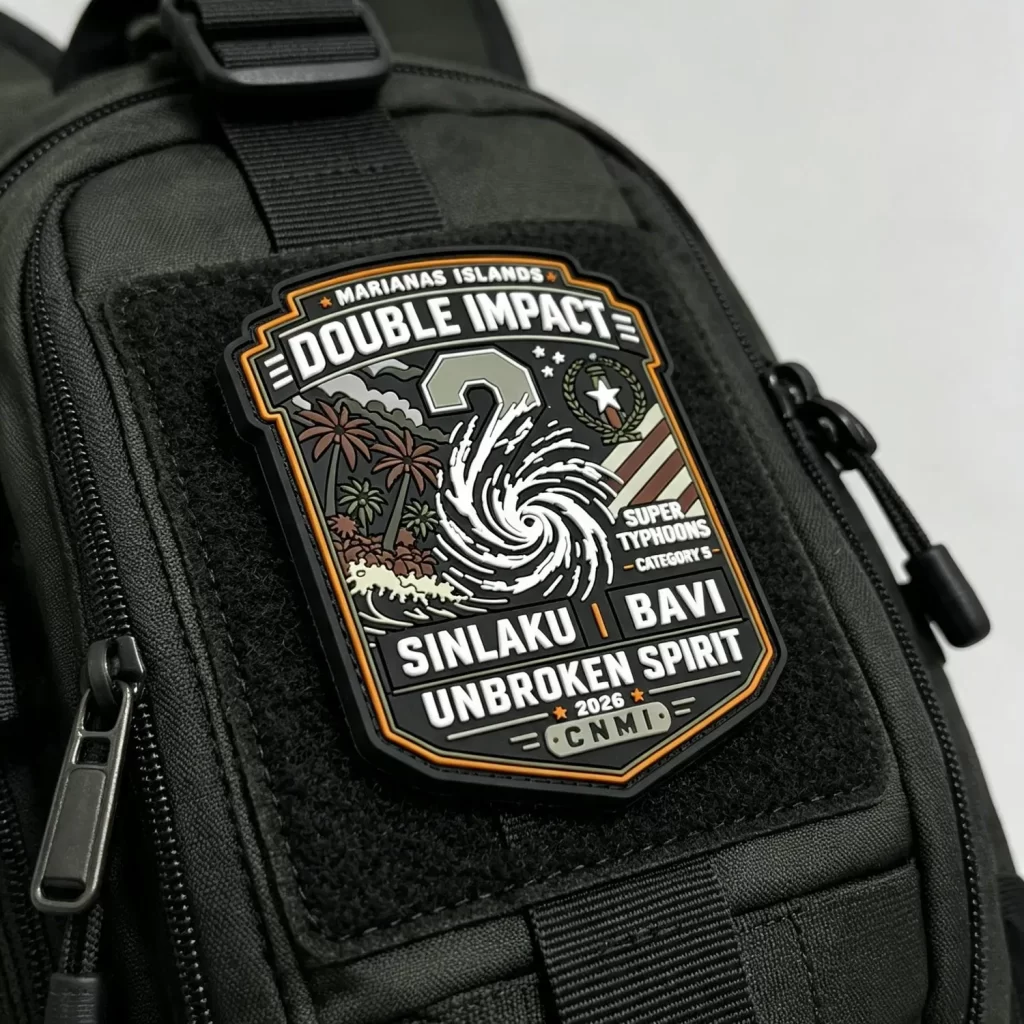
Custom 3D PVC patches are molded patches made from polyvinyl chloride (PVC). Their designs can incorporate raised elements, recessed backgrounds, layered colors, and textured surfaces.
The three-dimensional effect is created through the mold design rather than conventional embroidery.
Depending on the artwork and manufacturing method, a patch may feature:
- Raised brand logos
- Recessed lettering
- Multi-level symbols
- Textured backgrounds
- Contrasting borders
- Multiple molded colors
- Custom shapes and outlines
These features make 3D PVC patches suitable for brands that want a more dimensional appearance than a conventional flat logo.
For tactical gear manufacturers, the design can be developed around a company logo, product series, equipment model, brand mascot, or original graphic.
The final structure depends on the artwork, patch dimensions, mold capabilities, and intended application.
2. Why Tactical Gear Brands Use 3D PVC Patches
Tactical gear brands need to balance appearance, practical use, and manufacturing cost. Custom 3D PVC patches can help address several of these requirements.
Create a Distinctive Brand Identity
A molded patch gives logos a different visual character from printed labels or embroidered badges.
Raised lettering and layered graphics can help create a recognizable brand signature across multiple product categories.
For example, a tactical equipment company might use the same logo treatment on backpacks, utility pouches, chest rigs, and accessory cases. A consistent design helps connect individual products to the broader brand.
Support Product Differentiation
In a crowded market, brands often compete through product details rather than major functional differences alone.
A custom patch can help distinguish a product line through its shape, colors, textures, and logo presentation.
This is particularly useful for limited-edition releases, co-branded products, promotional collections, and brand-specific accessories.
Provide Flexible Design Options
PVC molding allows designers to explore raised and recessed details that may be difficult to reproduce in embroidery.
Depending on the design, brands can combine:
- Flat color fields
- Raised logos
- Recessed text
- Geometric patterns
- Textured surfaces
- Distinctive borders
Not every detail can be reproduced at every size, so artwork review is important before mold development.
Suit Different Gear Applications
Custom PVC patches can be developed for a range of tactical and outdoor products, including:
- Tactical backpacks
- Plate carriers
- Utility pouches
- Belt systems
- Equipment organizers
- Outdoor bags
- Protective equipment accessories
- Branded merchandise
The appropriate patch size, backing, thickness, and structure depend on where and how the product will be used.
3. Popular 3D PVC Patch Designs for Tactical Brands
Different tactical brands have different visual identities. Choosing the right design approach can help make a patch more recognizable while keeping it suitable for its intended application.
Raised Logo Patches
Raised logo patches emphasize the main brand symbol through a three-dimensional molded surface.
They work well for brands that want a clear, recognizable logo without excessive visual complexity.
Suitable applications: backpacks, tactical pouches, equipment bags, and branded accessories.
3D Text and Lettering
Raised or recessed lettering can make brand names, product lines, and short messages more visually prominent.
However, very small text can become difficult to reproduce cleanly. Designers should consider minimum line widths, letter spacing, and the finished patch size.
Suitable applications: brand identifiers, equipment labels, and product-series patches.
Geometric and Textured Designs
Geometric patterns, molded textures, and layered shapes can create a distinctive technical appearance.
These designs are often useful for brands with a modern, outdoor, or tactical visual identity.
Suitable applications: premium gear collections, limited-edition products, and customized accessories.
Morale-Inspired Designs
Some tactical gear brands develop original morale-style patches featuring mascots, slogans, humorous illustrations, or collectible graphics.
These products can support accessory sales and brand engagement.
Brands should ensure that artwork is original or properly licensed and that any use of official insignia or protected logos is authorized.
Subdued and Low-Visibility Designs
Some products require restrained branding rather than bright, high-contrast graphics.
A patch can use black, gray, olive, tan, or other muted colors, depending on the brand’s design requirements.
For these projects, color consistency and legibility should be evaluated together. Low-contrast artwork may require adjustments to raised details or border definition.
4. Choosing the Right PVC Patch Backing
Backing is an important design decision because it determines how the patch attaches to the final product.
Hook-and-Loop Backing
Hook-and-loop backing is commonly used on tactical gear with compatible loop panels.
Potential applications include:
- Backpacks with loop panels
- Plate carriers
- Tactical pouches
- Modular equipment
- Removable brand patches
Brands should specify whether the patch requires a hook backing, a loop backing, or a complete compatible attachment arrangement.
The backing dimensions should match the patch and the intended attachment area.
Sew-On Backing
A sew-on design may be suitable when the patch is intended to remain permanently attached to a product.
This option should be discussed with the manufacturer because the patch structure and sewing area can affect how it is integrated into the finished gear.
Adhesive or Other Attachment Options
Other attachment methods may be possible for particular applications, but suitability depends on the product surface, operating environment, and required service life.
For tactical equipment exposed to friction, moisture, or repeated handling, brands should evaluate the complete attachment system rather than considering the PVC material alone.
Recommendation: Confirm the backing type, attachment dimensions, and intended application before approving the production sample.
5. Custom 3D PVC Patches vs. Embroidered Patches
Both PVC and embroidered patches have advantages. The right choice depends on the design and intended product.
| Feature | 3D PVC Patches | Embroidered Patches |
|---|---|---|
| Visual effect | Raised and recessed molded details | Thread-based texture |
| Fine details | Depends on mold design and scale | Depends on stitch density and artwork |
| Surface | Molded, often smooth or textured | Stitched textile surface |
| Color areas | Defined by molded PVC sections | Created with embroidery threads |
| Shape options | Flexible custom-molded outlines | Custom-cut textile shapes |
| Moisture considerations | PVC itself is water-resistant | Depends on fabric, thread, and construction |
| Brand appearance | Technical, dimensional, modern | Traditional, textile-based |
| Design development | Typically requires a custom mold | Typically requires embroidery digitizing |
PVC is not automatically the better choice for every application. Embroidery may be preferable when a textile appearance is central to the design, while 3D PVC can be a strong option when a brand wants molded relief and clearly defined color areas.
Tactical gear brands should compare the finished appearance, construction, attachment method, cost, and application requirements before choosing.
6. How to Design a Production-Ready 3D PVC Patch
A design that looks good on a screen may need adjustments before it can be manufactured successfully.
The following considerations can help reduce production issues.
Start with Clear Artwork
Provide vector artwork when available, such as AI, EPS, or SVG files, along with any relevant reference images.
The artwork should clearly identify:
- Main logo elements
- Text and lettering
- Color boundaries
- Raised and recessed sections
- Border shape
- Intended dimensions
If the original artwork is only available as a raster image, the manufacturer may need to recreate or simplify parts of the design.
Simplify Details Where Necessary
Tiny lettering, narrow gaps, thin lines, and complicated overlapping shapes may not reproduce as intended in a small molded patch.
A production review can identify details that need to be enlarged, simplified, or separated.
The objective is to preserve the essential brand identity while making the design suitable for the intended size.
Define the 3D Structure
Not every part of a patch needs the same relief.
A brand might use raised lettering, a recessed background, and a relatively flat border. This creates visual hierarchy without making the design unnecessarily complicated.
The manufacturer should confirm which details can be produced reliably using the proposed mold design.
Confirm the Finished Size
The patch should be designed for the actual attachment area.
A large logo may work well on a backpack, while a smaller patch may be more appropriate for a pouch or compact accessory.
Confirm the finished dimensions and backing arrangement before approving the mold.
7. The OEM Manufacturing Process for Tactical Gear Brands
For brands developing custom 3D PVC patches, a structured OEM process can help reduce design errors and improve repeat-order consistency.
Step 1: Share the Project Requirements
Provide the artwork, target size, estimated order quantity, intended application, preferred colors, and backing requirements.
If the patch will be attached to a specific tactical product, photographs or measurements of the attachment area can help clarify the requirements.
Step 2: Review the Artwork
The manufacturer reviews the design for mold suitability, detail clarity, color separation, and structural limitations.
Potential adjustments should be discussed before mold production.
Step 3: Develop the Mold
A custom mold is prepared according to the approved design and specifications.
The mold determines the patch’s outline and the structure of its raised and recessed features.
Step 4: Produce and Approve a Sample
A pre-production sample allows the buyer to evaluate the actual product rather than relying entirely on a digital rendering.
Review the dimensions, colors, surface details, backing, and overall appearance.
Step 5: Begin Mass Production
Mass production should follow the approved sample and documented specifications.
Quality checks can cover material consistency, molding quality, color variation, dimensions, and backing attachment.
Step 6: Final Inspection and Packaging
Before shipment, the finished patches should be inspected according to the agreed requirements.
The manufacturer and buyer should also confirm quantities, packaging, labels, and shipping arrangements.
For a more detailed explanation, link this section to your article OEM Military Patch Manufacturing Process Explained.
8. Quality Control for Branded Tactical PVC Patches
For tactical gear brands, a patch is part of the finished product experience. Visible defects or inconsistent branding can affect the perceived quality of the gear itself.
A suitable quality control plan may include the following checks.
| QC Area | What to Verify |
|---|---|
| Artwork | Match the approved design |
| Dimensions | Check length, width, and thickness |
| Color | Compare with approved references |
| 3D details | Check raised and recessed features |
| Surface | Inspect for bubbles, cracks, and deformation |
| Border | Check shape and consistency |
| Backing | Verify attachment type and alignment |
| Quantity | Confirm the order quantity |
| Packaging | Check protection, labeling, and packing requirements |
For repeat orders, retaining approved artwork, color references, mold information, and sample records can help maintain consistency.
If the patches have specific durability or environmental requirements, the buyer should define suitable test methods and acceptance criteria before production.
9. How Tactical Gear Brands Can Manage Costs
Custom 3D PVC patch pricing depends on several factors. A low unit price does not necessarily represent the best overall sourcing decision.
Mold Development
A new design generally requires a custom mold. Mold complexity, the number of design details, and the supplier’s tooling policy can influence initial costs.
Ask whether the mold charge is separate from the patch price and clarify the terms for future reorders.
Patch Size and Thickness
Larger patches generally use more material and may require more production resources.
Thickness and 3D structure can also affect manufacturing requirements.
Colors and Design Complexity
The number of colors, separation between molded sections, and complexity of the raised details may influence production costs.
Simplifying unnecessary details can sometimes improve manufacturability without compromising the brand identity.
Order Quantity
Larger production quantities may reduce the unit cost by spreading certain setup costs across more pieces.
However, brands should avoid ordering more inventory than they can reasonably sell or use.
Backing and Packaging
Hook-and-loop backing, special attachment arrangements, individual packaging, and custom labels can affect the total order cost.
For an accurate quotation, provide the same specifications to every supplier being evaluated.
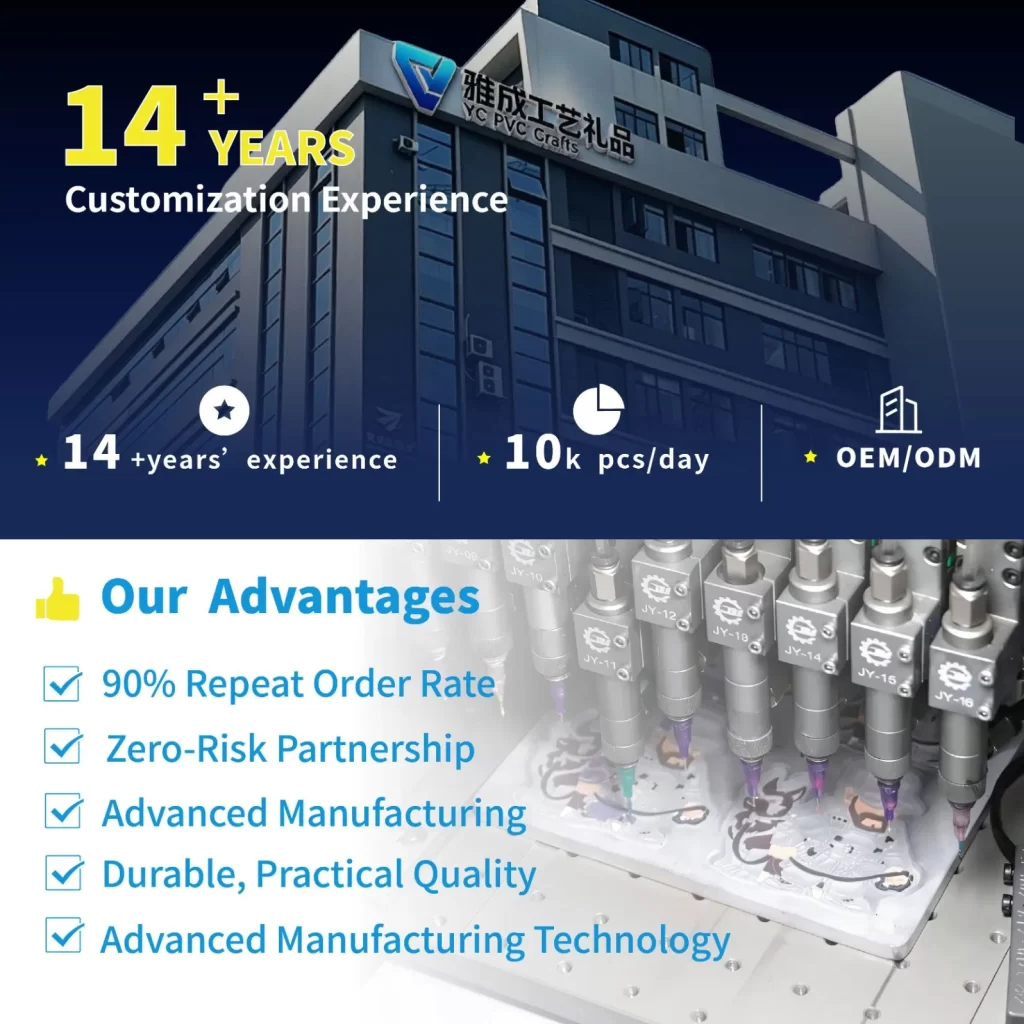
10. How to Choose a 3D PVC Patch Manufacturer
The right manufacturing partner should understand both the patch itself and the requirements of branded gear production.
When evaluating an OEM PVC patch manufacturer, consider the following.
Customization Capability
Can the manufacturer produce your preferred shapes, raised details, textures, colors, and backing configurations?
Ask for relevant examples of previous work.
Artwork and Mold Support
A capable supplier should be able to identify potential manufacturing issues before the mold is made.
This can reduce revisions and help avoid designs that look different from the intended result.
Sample Approval Process
Ask whether you can review a physical sample before mass production and how revisions are handled.
The approved sample should serve as a reference for the production order.
Quality Control
Find out how the supplier checks dimensions, color consistency, molding quality, backing, and finished quantities.
If you have specific requirements, confirm whether the supplier can follow and document them.
Repeat-Order Management
For brands with continuing product lines, retaining approved specifications and production references can help make repeat orders more consistent.
Communication and Lead Time
Confirm the quotation, sampling schedule, production lead time, shipping method, and responsibilities for approval at each stage.
Clear communication is especially valuable when the patch is one component in a larger product launch.
11. Questions to Ask Before Placing an OEM Order
Before confirming a custom 3D PVC patch project, tactical gear brands should ask:
- Can you manufacture the proposed 3D design?
- What artwork format do you need?
- Will the design require simplification?
- What are the mold development costs?
- Can you provide a physical pre-production sample?
- What backing options are available?
- How do you control color consistency?
- What quality checks are performed before shipment?
- Can you retain specifications for repeat orders?
- What are the MOQ, sampling time, production time, and shipping terms?
These questions help buyers compare suppliers on more than price alone.
12. Applications Across Tactical and Outdoor Product Lines
Custom 3D PVC patches can support multiple product categories within one brand.
Tactical backpacks: Use a recognizable logo patch on a compatible loop panel.
Plate carriers and chest rigs: Develop removable brand identifiers that fit the product’s attachment area.
Utility pouches: Use compact molded logos to maintain consistent branding across accessories.
Outdoor equipment: Create distinctive patches for backpacks, organizers, and selected outdoor products.
Retail accessories: Develop collectible designs, limited editions, or brand merchandise.
Private-label products: Use a consistent patch design across products manufactured for different retail channels.
When planning a product range, brands should consider whether the same design can be used across several product sizes or whether separate molds will be required.
Conclusion
Custom 3D PVC patches offer tactical gear brands a flexible way to develop dimensional logos, recognizable product identifiers, and distinctive accessories.
Their value depends on more than the visual effect. The design must be suitable for molding, the backing must fit the intended application, and the finished product should meet the brand’s quality and consistency requirements.
For B2B buyers, a reliable development process includes clear artwork, technical review, mold development, physical sample approval, controlled mass production, and final inspection.
Whether you are launching a new tactical gear brand, expanding an existing product line, or sourcing OEM patches for private-label products, defining the specifications early can help reduce production problems and improve repeat-order consistency.
Looking for a manufacturer for custom 3D PVC patches? Share your artwork, target dimensions, backing requirements, estimated quantity, and application details to discuss a suitable OEM solution for your tactical gear brand.