PVC Patch Quality Control Standards for Military Contracts
Introduction
For military units, defense suppliers, government contractors, and tactical equipment manufacturers, custom PVC patches are more than simple identification products.
They may be used on uniforms, tactical vests, backpacks, helmets, equipment cases, and other field gear. Because these products can be exposed to moisture, abrasion, sunlight, repeated handling, and demanding operating conditions, quality consistency is an important part of the procurement process.
For this reason, buyers sourcing PVC patches for military contracts should evaluate more than artwork and unit price. Material quality, dimensional accuracy, color consistency, backing strength, molding quality, and inspection procedures can all affect the final product.
A reliable supplier should therefore have a documented and repeatable PVC patch quality control process from artwork approval through final inspection.
This guide explains the main quality control points that military and defense buyers should consider when sourcing custom PVC patches.
What Does PVC Patch Quality Control Mean?
PVC patch quality control refers to the procedures used to ensure that every batch meets the agreed specifications before shipment.
For military and government-related orders, quality control can cover several stages:
- Artwork and specification verification
- Mold inspection
- PVC material preparation
- Color matching
- Molding quality
- Dimensional inspection
- Surface inspection
- Backing and Velcro inspection
- Adhesion and structural checks
- Packaging and quantity verification
- Final inspection before shipment
The exact inspection requirements may vary depending on the buyer, application, contract, and technical specifications.
The key principle is consistency: the approved sample or specification should become the reference for mass production.
1. Artwork and Specification Verification
Quality control begins before production starts.
A manufacturer should review the buyer’s artwork and production specifications before creating a mold or starting mass production.
Important details may include:
- Patch dimensions
- Shape and outline
- Logo or emblem
- Text and lettering
- PVC colors
- 2D or 3D structure
- Border design
- Surface texture
- Velcro backing
- Hook or loop configuration
- Attachment method
- Packaging requirements
Small details can become significant production problems if they are not confirmed before manufacturing.
For example, very small text may require design adjustment because PVC molding has practical limitations. Similarly, thin lines, narrow gaps, and small raised details should be checked before mold production.
A professional supplier should provide a digital proof or production drawing for buyer approval.
Recommended QC Check
Before mold production, verify:
| Item | Check |
|---|---|
| Size | Confirm dimensions |
| Shape | Match approved artwork |
| Text | Check spelling and legibility |
| Colors | Confirm color references |
| 2D/3D | Confirm structure |
| Backing | Confirm Velcro or attachment |
| Quantity | Confirm production quantity |
| Packaging | Confirm packing requirements |
This first-stage review helps prevent expensive corrections later.
2. PVC Material Quality Control
The PVC compound is one of the most important components of a PVC patch.
Material quality can influence:
- Flexibility
- Durability
- Surface appearance
- Color stability
- Resistance to moisture
- Resistance to repeated handling
- Overall service life
A military PVC patch manufacturer should maintain consistent material specifications across production batches.
For long-term programs, consistency is particularly important. If a customer orders the same patch several times, the appearance and physical characteristics should remain as consistent as reasonably possible.
What Buyers Should Ask
Military procurement teams can ask suppliers:
- What PVC material specification is used?
- How is material consistency controlled?
- Are production batches traceable?
- How are material colors controlled?
- Can the same specification be maintained for repeat orders?
These questions become more important when patches are part of a long-term supply program.
3. Color Matching and Consistency
Color consistency is another important quality control area.
Military patches may contain:
- Unit colors
- Service colors
- National flags
- Department colors
- Brand colors
- Camouflage-related colors
- Subdued tactical colors
The manufacturer should use an agreed color reference whenever possible.
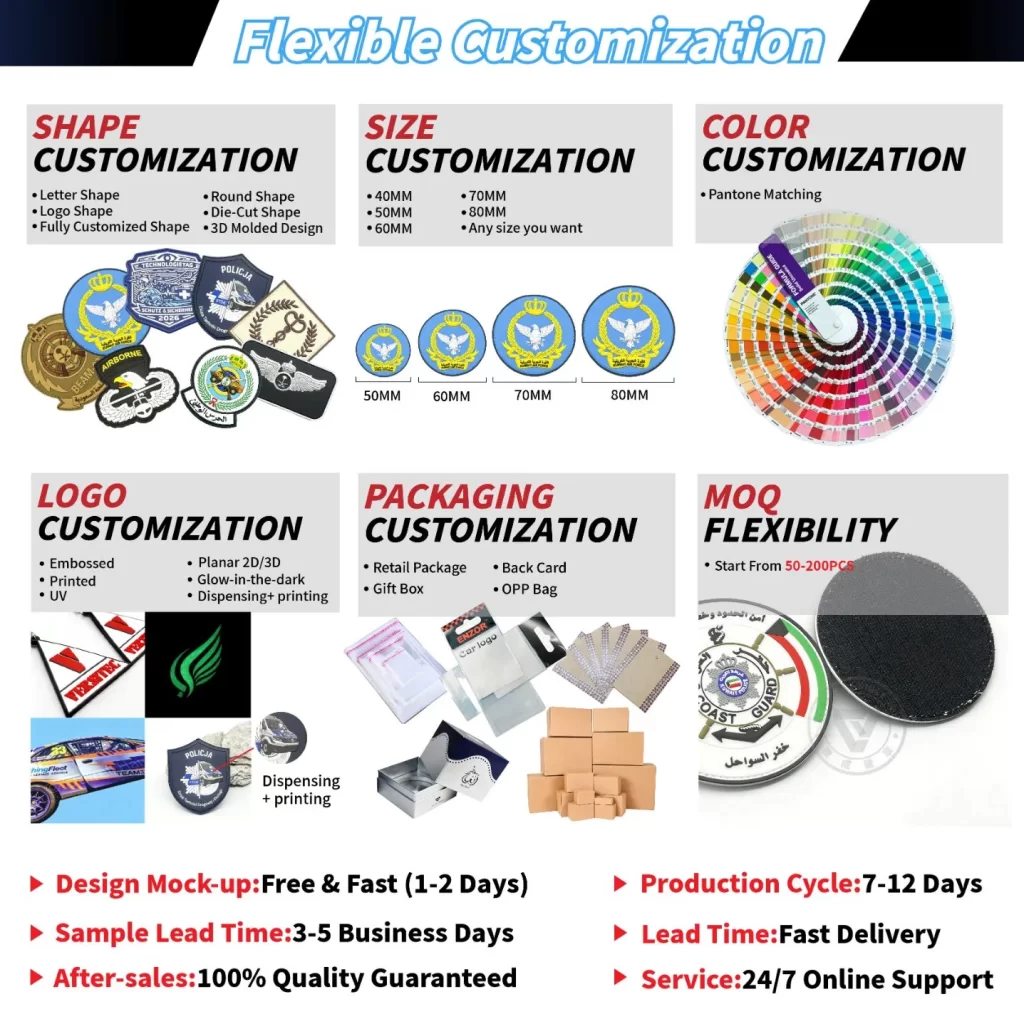
Depending on the project, the buyer may provide a physical sample, Pantone reference, digital artwork, or another agreed color specification.
However, buyers should understand that screen displays and physical PVC materials may not appear exactly the same.
For production orders, it is good practice to approve a physical sample before mass production when color accuracy is important.
Color QC Should Check
- Base PVC color
- Border color
- Logo color
- Text color
- Color separation
- Consistency between patches
- Consistency between production batches
For recurring military contracts, keeping an approved physical sample or production reference can help improve consistency across future orders.
4. Mold Quality and Dimensional Accuracy
The mold determines the fundamental structure of a PVC patch.
Poor mold quality can result in:
- Uneven borders
- Distorted logos
- Incorrect dimensions
- Inconsistent depth
- Poor 3D details
- Sharp or unwanted edges
- Misaligned layers
For this reason, mold inspection should be completed before full production.
The manufacturer should verify the mold against the approved artwork and technical specifications.
Important Dimensional Checks
Depending on the project, inspection may include:
- Overall length
- Overall width
- Thickness
- Border width
- Raised areas
- Recessed areas
- Hole or opening dimensions
- Shape accuracy
For military contracts involving multiple production batches, maintaining the original mold specification can also help reduce variation between orders.
5. 2D and 3D Detail Inspection
PVC patches can use different levels of relief and surface detail.
2D PVC Patches
2D patches generally have relatively flat layers of PVC with defined color areas.
Quality inspection should focus on:
- Layer separation
- Edge definition
- Color boundaries
- Letter clarity
- Surface uniformity
3D PVC Patches
3D patches use raised or recessed elements to create additional depth.
Inspection should focus on:
- Correct relief height
- Detail definition
- Smooth transitions
- No unwanted deformation
- Consistent depth between patches
Small details should remain clear after molding.
For military logos, unit insignia, tactical symbols, and equipment branding, maintaining the intended visual structure is especially important.
6. Surface and Edge Inspection
A visual inspection should be performed after molding.
Inspectors should look for obvious production defects such as:
- Bubbles
- Cracks
- Scratches
- Deformation
- Uneven surfaces
- Excess material
- Poor edges
- Color contamination
- Incomplete filling
- Misaligned layers
The border should be consistent and properly formed.
The surface should also match the approved sample or specification.
A standardized visual inspection checklist can help different QC staff evaluate products consistently.
7. Velcro and Backing Quality Control
Many military PVC patches are designed for removable attachment using hook-and-loop backing.
Therefore, the backing system should be inspected as carefully as the PVC itself.
Quality control may include:
- Correct hook or loop material
- Correct backing dimensions
- Proper attachment
- Edge alignment
- Stitching quality where applicable
- Bonding strength
- Compatibility with the intended attachment surface
The backing should not be noticeably misaligned with the patch.
For tactical applications, repeated attachment and removal can place additional stress on the backing and stitching or bonding area.
Therefore, buyers should discuss the intended application with the manufacturer before finalizing the backing specification.
8. Dimensional and Weight Consistency
For larger military procurement programs, batch consistency can be more important than the specification of a single patch.
A manufacturer may use measurement tools to check:
- Length
- Width
- Thickness
- Weight
- Backing dimensions
Not every military contract requires the same tolerance.
Therefore, buyers should establish acceptable tolerances during the specification stage instead of assuming that one universal PVC patch tolerance applies to every project.
A clear tolerance specification makes inspection more objective.
9. Durability and Functional Testing
Depending on the contract requirements, military PVC patches may need to withstand repeated handling and environmental exposure.
Potential testing areas can include:
Water Resistance
PVC is naturally suitable for applications where moisture resistance is useful, but the complete patch assembly should still be evaluated according to the actual application.
The PVC material, backing, stitching, adhesive, and attachment method can all affect overall performance.
Abrasion Resistance
Tactical equipment is frequently exposed to friction and repeated handling.
Abrasion testing can help determine whether the surface, raised details, and printed or molded elements remain acceptable after repeated use.
Flexibility
The patch may need to flex when attached to curved equipment or clothing.
The manufacturer should confirm that the selected PVC formulation and structure are suitable for the application.
Attachment Performance
For Velcro-backed patches, attachment performance should be evaluated according to the intended use.
The correct test method depends on the buyer’s specification and application.
10. Environmental Resistance
Military equipment can be used in a wide range of environments.
Depending on the contract, buyers may be concerned about:
- Moisture
- Temperature changes
- UV exposure
- Dust
- Repeated handling
- Outdoor storage
- Cleaning
- Transportation conditions
However, not every PVC patch needs the same environmental testing.
Instead, the supplier and buyer should identify the actual operating environment and define appropriate testing requirements.
This is particularly important for government contracts where technical specifications may be explicitly defined in the procurement documents.
11. First Article Inspection
For larger or technically controlled military orders, a first article or pre-production sample can be an important quality checkpoint.
The purpose is to confirm that the supplier can produce the approved design according to the agreed specifications before mass production.
A first article inspection may compare:
- Artwork
- Dimensions
- Colors
- Material
- 2D/3D structure
- Backing
- Surface quality
- Packaging requirements
Once the first article is approved, it can become the production reference for the remaining order.
This creates a clear link between design approval → production → inspection.
12. In-Process Quality Control
Quality control should not happen only after production is finished.
A better approach is to perform inspections during production.
For example:
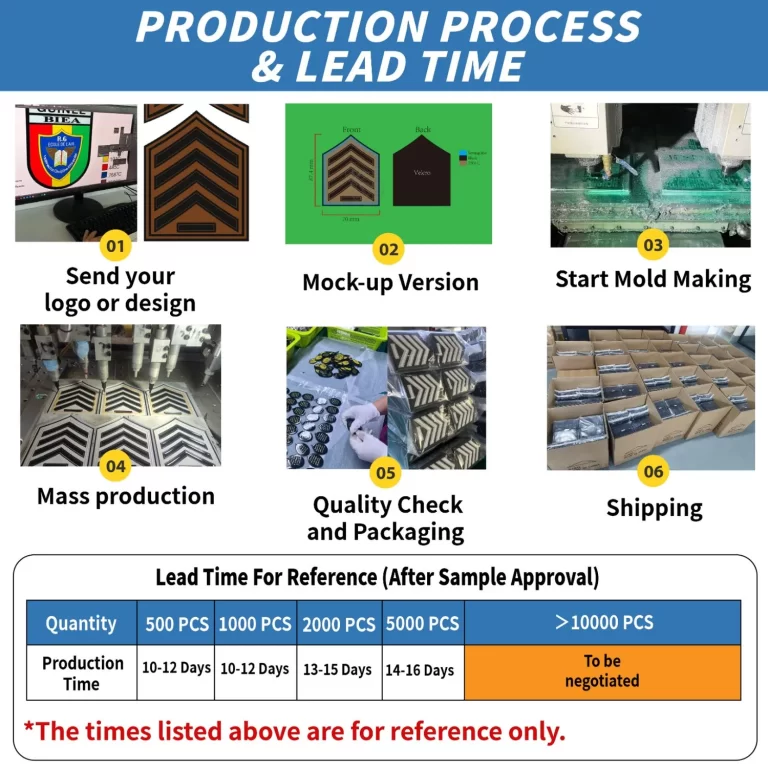
Artwork approval
↓
Mold inspection
↓
First sample
↓
Sample approval
↓
Mass production
↓
In-process inspection
↓
Final inspection
↓
Packaging
↓
Shipment
In-process inspection allows manufacturers to identify problems before an entire batch is completed.
This can reduce waste, rework, and delivery delays.
13. Final Inspection Before Shipment
Final inspection is the last major quality checkpoint.
Before shipment, the manufacturer should verify the finished products against the approved requirements.
A final inspection may include:
Appearance
- Correct shape
- Clean surface
- Clear details
- Consistent colors
- No visible defects
Dimensions
- Length
- Width
- Thickness
- Backing dimensions
Quantity
- Correct total quantity
- Correct quantities by design
- Correct packaging quantities
Packaging
- Correct labels
- Appropriate protection
- Correct carton quantities
- Shipping marks where required
For B2B military orders, quantity verification is especially important because multiple designs may be included in one shipment.
14. Quality Records and Traceability
For long-term military supply programs, documentation can be as important as physical inspection.
A manufacturer may maintain records such as:
- Approved artwork
- Production drawings
- Sample approval
- Color references
- Mold records
- Production batch information
- QC inspection records
- Packaging records
- Shipment information
These records can make future reorders easier.
If the same military unit or contractor places another order months later, the supplier can refer back to the previous approved specifications instead of starting from zero.
This is one reason why organized production management is important for recurring OEM programs.
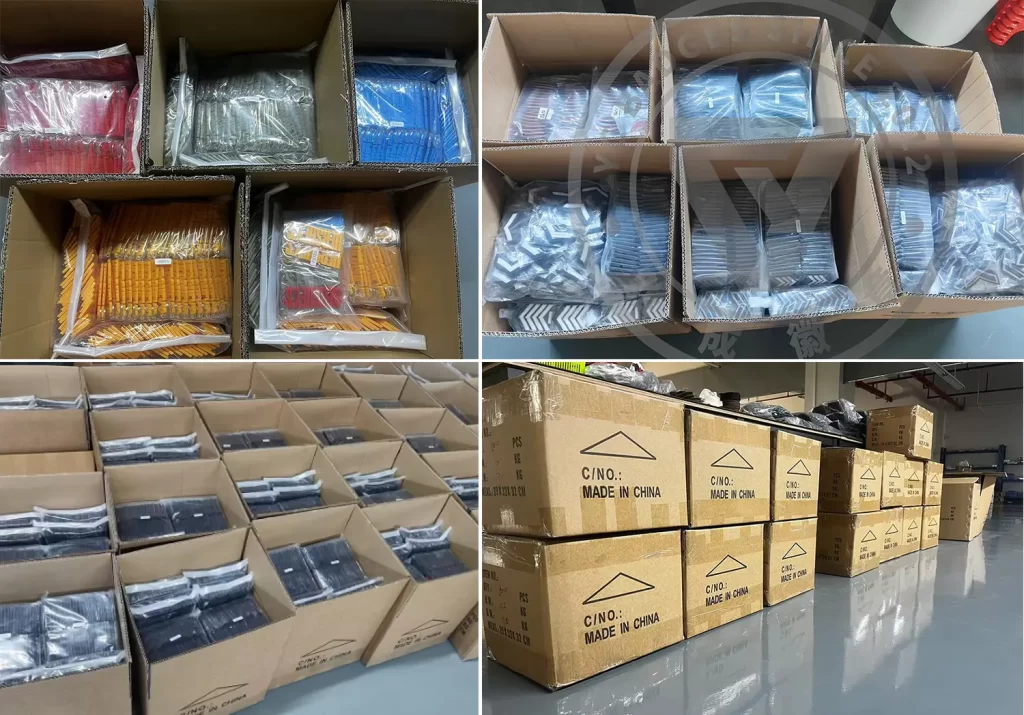
15. Common Quality Problems in Military PVC Patches
Before choosing a supplier, procurement teams should understand common production issues.
| Quality Issue | Possible Cause | Recommended Control |
|---|---|---|
| Color variation | Material or mixing inconsistency | Approved color reference |
| Uneven border | Mold or molding issue | Mold inspection |
| Blurred details | Artwork or mold limitation | Pre-production artwork review |
| Surface bubbles | Molding process issue | In-process inspection |
| Incorrect size | Production variation | Dimensional measurement |
| Poor Velcro attachment | Backing or bonding issue | Backing inspection |
| Deformed shape | Molding or handling issue | Visual inspection |
| Missing details | Incomplete molding | First article inspection |
| Quantity shortage | Packing error | Final quantity check |
| Batch inconsistency | Poor production control | Production records |
The goal is not simply to inspect defects after production. The better approach is to identify where the defect can originate and control that stage of the process.
16. What Military Buyers Should Include in a PVC Patch Specification
A clear technical specification makes quality control much easier.
Before placing an order, buyers should define:
Product Specification
- Patch dimensions
- Shape
- Thickness
- PVC type
- 2D or 3D structure
- Number of colors
- Color references
- Border design
- Surface finish
Attachment Specification
- Hook-and-loop backing
- Hook or loop side
- Backing dimensions
- Stitching or bonding requirements
Quality Requirements
- Dimensional tolerances
- Color tolerance
- Visual defect requirements
- Durability requirements
- Environmental requirements
- Inspection method
Packaging Requirements
- Individual packaging
- Quantity per bag
- Quantity per carton
- Labels
- Carton markings
The more clearly these requirements are documented, the easier it becomes for both the buyer and manufacturer to measure quality.
17. How to Evaluate a PVC Patch Manufacturer’s Quality Control System
When comparing suppliers, buyers should look beyond product photos.
Ask the manufacturer how quality is controlled throughout the production process.
Useful questions include:
- Do you provide a pre-production proof?
- Can you provide a physical sample before mass production?
- How do you control PVC colors?
- How do you inspect molds?
- What dimensional measurements are recorded?
- How are 2D and 3D details inspected?
- How is Velcro attachment checked?
- Do you perform in-process inspections?
- What is included in final inspection?
- Can you provide QC records when required?
- How do you maintain consistency for repeat orders?
- How are molds and production specifications archived?
A manufacturer that can clearly explain these procedures gives buyers a better basis for evaluating production capability.
18. Quality Control Is More Than a Final Inspection
One common mistake in B2B sourcing is treating quality control as a final visual inspection.
In reality, quality starts much earlier.
For custom military PVC patches, a reliable quality system should connect:
Specification
→ Artwork
→ Mold
→ Material
→ Sample
→ Production
→ Inspection
→ Packaging
→ Shipment
If an error enters the process at the artwork or mold stage, final inspection may identify the problem but cannot prevent the production cost associated with it.
This is why prevention is an important part of an effective QC system.
19. Quality Control for Repeat Military Orders
Military and defense buyers often need the same patch design repeatedly.
For example, a contractor may order the same unit patch several times over a year.
In this situation, consistency becomes particularly important.
A manufacturer should retain:
- Approved artwork
- Mold information
- Color references
- Material specifications
- Backing specifications
- Previous production records
- Packaging requirements
This helps reduce unnecessary variation between the first order and subsequent production batches.
For long-term OEM relationships, documented specifications can also make reordering faster and more predictable.
20. Building a Practical QC Checklist for Military PVC Patches
A simple checklist can help procurement teams standardize supplier evaluation.
Pre-Production
☐ Artwork approved
☐ Dimensions confirmed
☐ Colors confirmed
☐ 2D/3D structure confirmed
☐ Backing confirmed
☐ Packaging requirements confirmed
Production
☐ Mold inspected
☐ Material checked
☐ Sample approved
☐ Color consistency checked
☐ Dimensional consistency checked
☐ Surface quality checked
☐ Backing quality checked
Final Inspection
☐ Appearance approved
☐ Dimensions within agreed tolerance
☐ Correct quantity
☐ Correct designs
☐ Packaging verified
☐ Carton information verified
☐ QC records completed where required
This checklist can be adapted according to the specific contract.
Conclusion
For military contracts, PVC patch quality control standards should be treated as part of the procurement specification rather than as an afterthought.
A professional quality control system should cover the entire production process, from artwork and mold development to material control, molding, backing, inspection, packaging, and shipment.
For military units, government contractors, defense suppliers, police departments, and tactical equipment manufacturers, the most important question is not simply:
“Can the supplier make this PVC patch?”
It is:
“Can the supplier consistently reproduce the approved PVC patch according to clearly defined specifications?”
A manufacturer with documented production procedures, sample approval, in-process inspection, final QC, and repeat-order management can provide a stronger foundation for long-term B2B supply relationships.
If you are sourcing custom military PVC patches for uniforms, tactical equipment, government contracts, or defense supply programs, define your quality requirements before production and confirm them with your manufacturer.
Need custom PVC patches for a military or defense project? Contact our team to discuss your artwork, specifications, quantity, backing requirements, and quality control needs.