
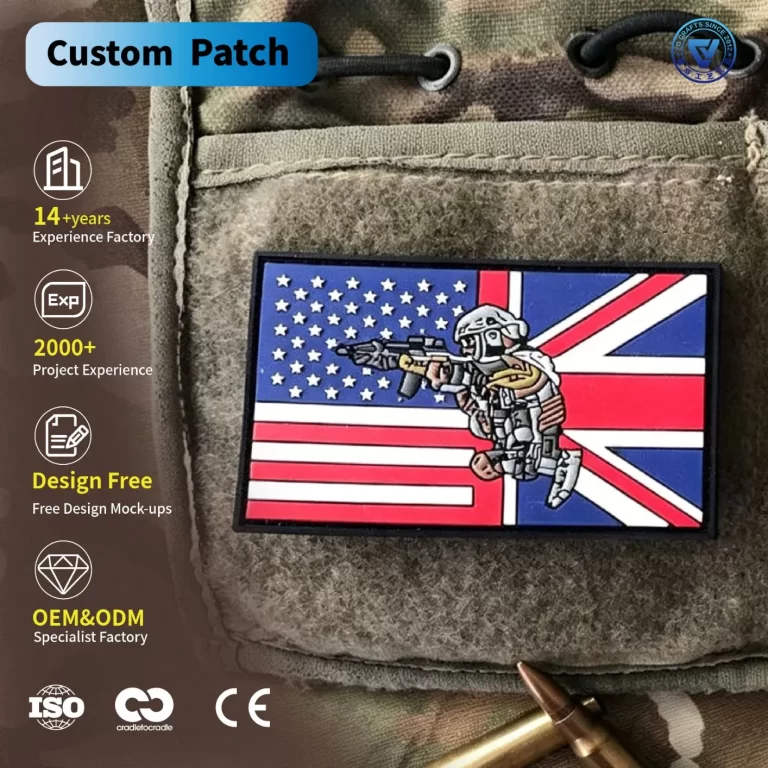
Introduction: Why Standardization Matters in Military Patch Procurement
In large military organizations, consistency is not optional—it is essential.
From uniforms to tactical gear, every element must follow defined standards to ensure clear identification, operational efficiency, and professional appearance. This includes insignia patches used across multiple divisions, units, and operational environments.
However, without proper standardization, military units often face challenges such as inconsistent designs, mismatched colors, and unreliable quality across suppliers.
To address these issues, many organizations are adopting standardized military velcro pvc patches as part of their procurement strategy.
This guide explains how military units standardize patch design, production, and usage across divisions.
The Challenge: Inconsistency Across Units and Suppliers
Before implementing standardized systems, procurement teams often encounter:
- Variations in patch size and shape
- Inconsistent color matching between batches
- Differences in Velcro quality
- Multiple suppliers with varying standards
- Difficulty managing bulk reorders
These inconsistencies can lead to confusion in the field and increased operational costs.
Why Velcro PVC Patches Enable Standardization
1. Modular Attachment System
Velcro tactical patches allow patches to be:
- Easily attached and removed
- Swapped between uniforms and gear
- Updated without replacing entire garments
This modular system makes it easier to implement standardized designs across divisions.
2. Consistent Mold-Based Production
Unlike embroidery, military pvc patches are produced using molds.
This provides:
- Identical replication across batches
- Stable design consistency
- Accurate logo reproduction
Once a mold is approved, the same design can be reproduced with minimal variation.
3. Durability Across All Units
Standardization requires products that perform consistently in different environments.
Military velcro pvc patches offer:
- Waterproof construction
- Resistance to wear and tear
- Long-lasting color retention
This ensures patches remain consistent across various operational conditions.
Key Elements of Patch Standardization
1. Unified Design Guidelines
Military organizations typically define:
- Official patch sizes (e.g., 2–4 inches)
- Standard shapes (shield, circular, rectangular)
- Approved color palettes
- Font and text guidelines
These guidelines ensure visual consistency across all units.
2. Centralized Artwork Approval
To maintain consistency, designs are often:
- Reviewed by a central authority
- Approved before production
- Stored for future reorders
This prevents unauthorized variations in patch design.
3. Standardized Velcro Specifications
Velcro quality directly impacts usability.
Standard requirements include:
- Strong hook backing
- Consistent attachment strength
- Durable edge finishing
This ensures patches perform reliably across different uniforms and gear systems.
4. Supplier Consolidation
Many organizations reduce variability by working with a single OEM military patch manufacturer.
Benefits include:
- Consistent production quality
- Simplified communication
- Faster reordering
- Better pricing for bulk orders
5. Bulk Production and Inventory Planning
Standardization enables:
- Bulk ordering for multiple divisions
- Inventory stock management
- Faster distribution across units
This improves procurement efficiency and reduces lead times.
Standardization Workflow: From Design to Deployment
A typical standardized patch system follows these steps:
- Define design standards
- Create and approve artwork
- Develop production molds
- Conduct sample testing
- Approve final specifications
- Begin bulk production
- Distribute across divisions
- Maintain design records for reorders
This structured process ensures long-term consistency.
Real-World Application: Multi-Division Military Units
Large military organizations often manage:
- Multiple battalions
- Specialized units
- Joint operations teams
Standardized military velcro pvc patches allow these divisions to maintain:
- Unified branding
- Clear identification
- Interoperability across units
This is especially important in joint or multinational operations.
Benefits of Standardizing PVC Patch Systems
Operational Efficiency
Standardized patches reduce confusion and improve identification in the field.
Cost Control
Bulk production and reduced design variations lower overall procurement costs.
Brand Consistency
Uniform appearance strengthens unit identity and professionalism.
Simplified Logistics
Fewer suppliers and standardized SKUs make inventory management easier.
How to Implement a Standardized Patch System
For procurement teams, successful implementation involves:
- Defining clear design and material standards
- Selecting a reliable OEM manufacturer
- Centralizing design approvals
- Planning bulk production cycles
- Maintaining digital records for reorders
Working with an experienced supplier ensures smooth execution.
Choosing the Right OEM Military Patch Manufacturer
To support standardization, your manufacturer must offer:
- Consistent mold production
- Accurate color matching
- High-quality Velcro backing
- Scalable production capacity
- Reliable delivery timelines
A strong manufacturing partner is essential for maintaining long-term consistency.
Conclusion: Building a Scalable Patch System
Standardizing military velcro pvc patches is more than a design decision—it is a strategic approach to improving efficiency, consistency, and cost control across military divisions.
By implementing unified standards and working with a reliable OEM manufacturer, organizations can create a scalable patch system that supports both operational and logistical needs.
Request a Quote for Standardized Military PVC Patches
If your organization is planning to standardize:
- Military Velcro PVC patches
- Unit identification systems
- Bulk patch procurement
We provide OEM manufacturing solutions designed for large-scale military and tactical applications.
👉 Contact us today to request:
- Design consultation
- Sample development
- Bulk pricing
- Production planning support